Description
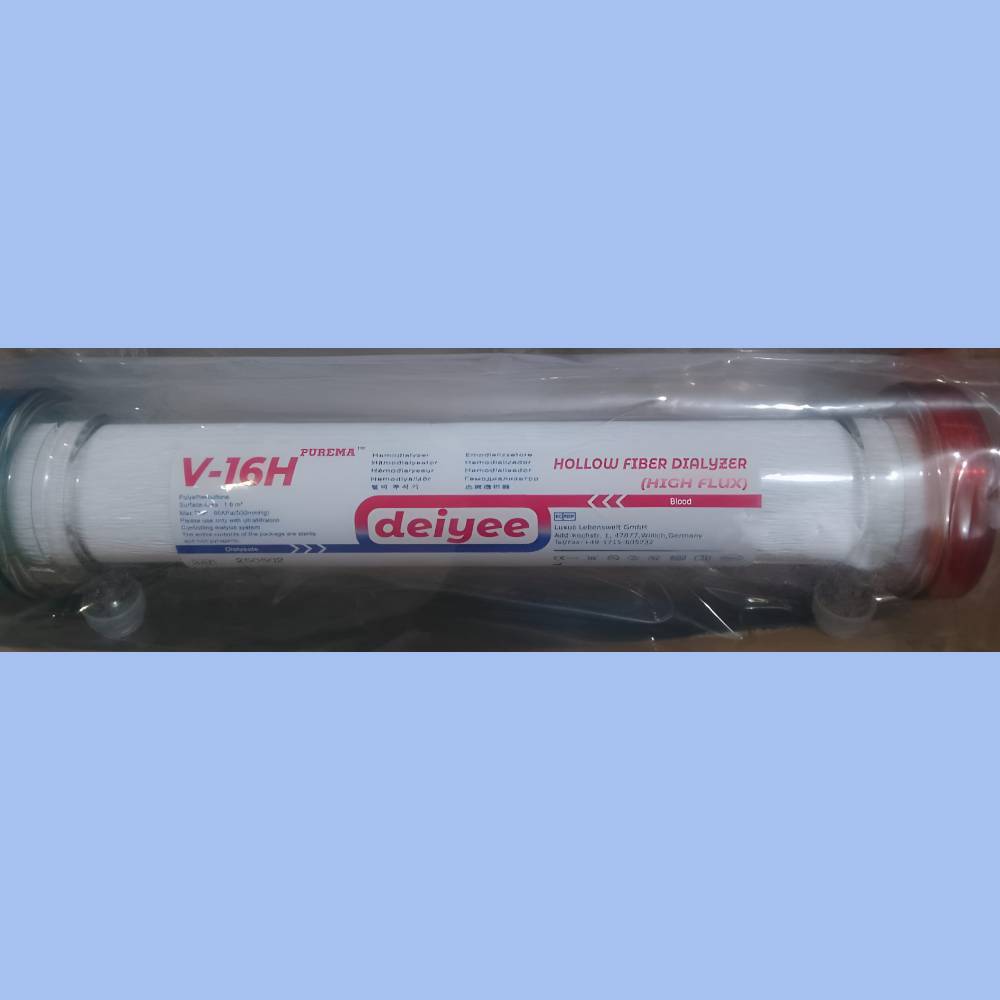
A dialyzer, often called an “artificial kidney,” is a medical device used in hemodialysis to filter waste products, toxins, and excess water from a patient’s blood. It acts as a semi-permeable membrane filter that separates blood from dialysis fluid, allowing for purification and electrolyte regulation when kidneys fail.
Key Aspects of a Dialyzer:
Function: It serves as an extracorporeal, artificial kidney, removing urea, creatinine, and excess fluid.
Mechanism: Blood flows through thousands of thin, hollow, semi-permeable fibers (membrane) while a cleansing solution (dialysate) flows in the opposite direction on the outside of these fibers.
Process: Toxins move from the blood into the dialysate through diffusion, while excess water is removed via hydrostatic pressure (ultrafiltration).
Components: It consists of a plastic housing, blood ports (inlet/outlet), dialysate ports (inlet/outlet), and the hollow fiber bundles.
Types: Dialyzers vary in size and membrane surface area based on the patient’s size and treatment needs.
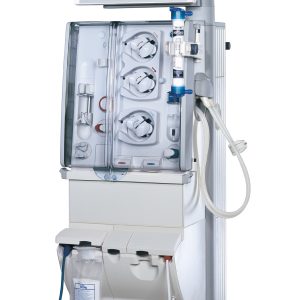
It is the core, disposable component of a hemodialysis machine.



Reviews
There are no reviews yet.